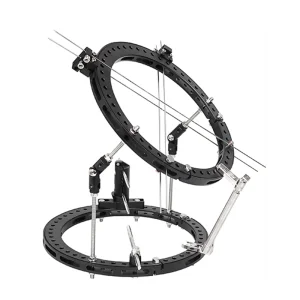
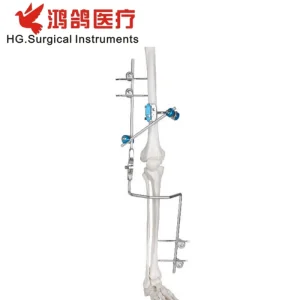
High-precision orthopedic instruments designed for German trauma centers and clinics.
Germany stands as a global titan in medical technology, specifically within the niche of orthopedic trauma solutions. The region of Tuttlingen, often referred to as the "World Center of Medical Technology," serves as the epicenter for the production of high-grade surgical instruments, including linear external fixators. As a key supplier and manufacturing partner, our operations align with the rigorous standards expected by the German healthcare system (Gesundheitswesen).
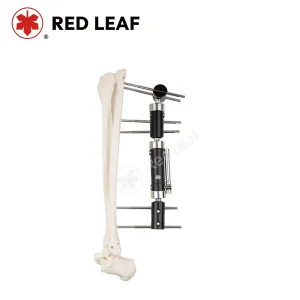
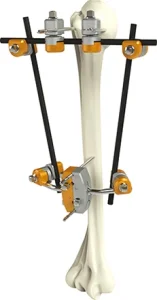
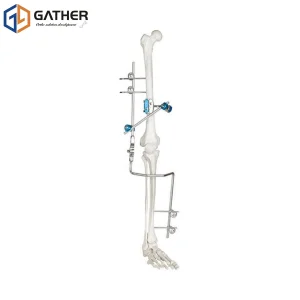
The German market for external fixation is driven by a sophisticated infrastructure of Level 1 trauma centers (Überregionales Traumazentrum). Hospitals in major cities like Berlin, Munich, Frankfurt, and Hamburg demand devices that offer not just stabilization, but modularity and biocompatibility. Linear external fixators are preferred for their simplicity in emergency stabilization (Damage Control Orthopedics) and their precision in definitive treatment for long bone fractures.
Meticulous attention to tolerances and material fatigue resistance.
Fully compliant with EU Medical Device Regulations for maximum safety.
Utilizing computational stress analysis for optimized fixator frames.
Efficient supply chain from German hubs to over 70 countries.
The orthopedic landscape in Germany is currently undergoing a digital transformation. One of the most significant trends is the integration of 3D-printed patient-specific components with traditional linear fixator systems. This allows German surgeons to address complex malunions or bone defects with unprecedented accuracy.
Furthermore, there is a strong shift toward Carbon Fiber-Reinforced Polyetheretherketone (CFR-PEEK) and high-grade radiolucent materials. In German oncology and trauma wards, radiolucency is critical for post-operative monitoring via X-ray and CT scans without the interference of metal artifacts. Our factories are at the forefront of this shift, producing carbon-fiber rods and components that meet these high-tech requirements.
Germany’s high-speed road networks necessitate robust "Damage Control" protocols. Linear fixators are the go-to solution for rapid stabilization of comminuted femoral or tibial fractures in emergency departments from Cologne to Stuttgart.
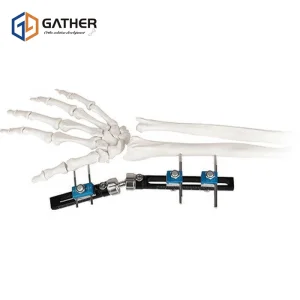
With a high participation in skiing (Alps) and football, German clinics specialize in complex joint-spanning fixation. Our ankle fusion and wrist fixators are designed for the high-demand recovery cycles of athletic patients.
As Germany's demographic shifts, fixators must accommodate osteoporotic bone. Hydroxyapatite-coated pins and specialized threading are engineered to provide superior purchase in aging bone structures.
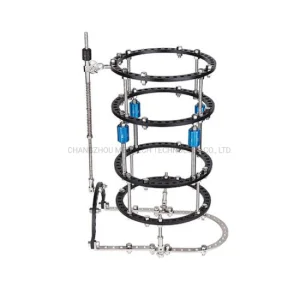
Advanced centers in Heidelberg and Münster utilize our Ilizarov and hexagonal pillar systems for complex bone transport and limb lengthening surgeries, correcting congenital deformities or post-traumatic shorting.
Surgical Success Rate
Export Destinations
13485 Certified
Technical Support
We are dedicated to the research, development, production, and sales of orthopedic implants and tools. In the continuous process of design updates, we strive for excellence, meticulously crafting each product.
Our quality control philosophy: Quality and integrity first, striving for excellence, and pursuing the highest standards.
A professional R&D team and long-term technical exchanges with leading hospital experts ensure that our products function to their fullest potential. Our factory has passed ISO 9001 and ISO 13485 certifications. Our products exceed all international quality and safety standards, including CE and FDA certifications. For many years, our products have been exported to more than 70 countries and regions in Europe, America, Africa, and Southeast Asia.
Our professional team is dedicated to serving every customer. Your trust is the greatest recognition of our service. We will rely on high-quality products and continuously launch new marketable products based on market demand, achieving mutual benefit and win-win results with our customers.
Explore our full range of solutions for every orthopedic challenge.
Choosing a supplier for linear external fixators in Germany requires a partner who understands the "Mittelstand" values of reliability, longevity, and precision. Our products are not merely tools; they are the result of decades of collaborative research with orthopedic surgeons who face the daily realities of the operating room.
Whether you are a medical device distributor in North Rhine-Westphalia or a procurement officer for a hospital group in Saxony, our logistical network ensures that sterile and non-sterile fixation systems reach your facility with efficiency. Our commitment to the German market includes providing comprehensive technical manuals, surgical technique guides, and on-site support for complex cases.
By integrating AI-enhanced manufacturing and adhering to the strictest European quality benchmarks, we provide a competitive edge to our partners. Our fixators offer the perfect balance of lightweight design (using Titanium Grade 5) and extreme stability, ensuring that patient mobilization can begin as early as possible—a key metric in the German DRG (Diagnosis Related Groups) reimbursement system.
 Daher Orthopedic Implants