Kirschner wires, colloquially known as K-wires, represent a cornerstone in the field of orthopedic surgery and traumatology. Since their introduction by Martin Kirschner in 1909, these sterilized, sharpened stainless steel or titanium pins have evolved from simple fixation tools into sophisticated medical instruments used in a myriad of surgical procedures. Today, as a leading China Kirschner Wires Exporter, we recognize the expanding global footprint of these essential devices.
In the current industrial landscape, the demand for K-wires is driven by an aging global population and a significant rise in sports-related injuries and road accidents. Statistically, the global orthopedic fixation market is projected to reach billions of dollars by 2030, with K-wires maintaining a dominant share in the "trauma fixation" segment. From the bustling surgical theaters of New York to remote clinics in Southeast Asia, K-wires are the go-to solution for stabilizing bone fragments, acting as guide pins for larger implants, or providing temporary skeletal traction.
Industrial manufacturing of K-wires has shifted toward unprecedented precision. Modern surgical requirements demand wires that offer high biocompatibility, excellent fatigue strength, and varied tip geometries (diamond, trocar, or threaded) to minimize bone necrosis during insertion. As top-tier exporters, we leverage AI-driven quality control and automated CNC grinding to ensure each wire meets the rigorous ISO 13485 standards required by international healthcare providers.
The transition from 316L Stainless Steel to medical-grade Titanium alloys (Ti6Al4V) is accelerating. These materials offer better MRI compatibility and reduced allergic reactions in patients.
Innovation in hydroxyapatite or antimicrobial coatings is reducing the risk of pin-tract infections, a major concern in long-term external fixation cases.
K-wires are increasingly used in tandem with robotic-assisted surgery and 3D-printed surgical guides, requiring tighter tolerances in wire diameter and straightness.
For international medical distributors and hospital procurement officers, selecting a reliable China Kirschner Wires Exporter involves more than just comparing prices. The global market demands a blend of scalability, certification, and customization.
Localization in Developed Markets: In Europe and North America, there is a massive demand for "Disposable K-wire Kits." These pre-packaged, sterile sets eliminate the need for hospital-side sterilization, reducing labor costs and cross-contamination risks. Our factory specializes in EO (Ethylene Oxide) sterilized packaging that meets stringent CE and FDA regulations.
Emerging Market Needs: In regions like Latin America, Africa, and parts of Asia, the focus is on durability and versatility. K-wires are frequently used in pediatric orthopedics for Supracondylar humerus fractures and in veterinary medicine for small animal fracture repair. These markets prioritize suppliers who can offer bulk shipments with consistent mechanical properties.
Our role as a leading manufacturer is to bridge these regional gaps. We provide bespoke wire lengths, tip configurations, and material grades to ensure that whether you are in a high-tech trauma center in Berlin or a specialized veterinary clinic in Sao Paulo, our K-wires perform with absolute reliability.
We are dedicated to the research, development, production, and sales of orthopedic implants and tools. In the continuous process of design updates, we strive for excellence, meticulously crafting each product.
Our quality control philosophy: Quality and integrity first, striving for excellence, and pursuing the highest standards.
A professional R&D team and long-term technical exchanges with leading hospital experts ensure that our products function to their fullest potential. By understanding the mechanical challenges faced during surgery, we optimize our Kirschner wires for superior grip and minimal bone trauma.
Our factory has passed ISO 9001 and ISO 13485 certifications. Our products exceed all international quality and safety standards, including CE and FDA certifications. For many years, our products have been exported to more than 70 countries and regions in Europe, America, Africa, and Southeast Asia.
Our professional team is dedicated to serving every customer. Your trust is the greatest recognition of our service. We will rely on high-quality products and continuously launch new marketable products based on market demand, achieving mutual benefit and win-win results with our customers.
We utilize high-speed automated wire-drawing and precision grinding machines. This ensures that every K-wire has a perfectly centered point and consistent diameter, preventing "wandering" during surgical insertion.
Every batch of medical-grade steel or titanium is accompanied by a material certificate. We guarantee the chemical composition and mechanical properties are optimized for biocompatibility and strength.
Need a specific length, a threaded tip, or a specific stiffness? Our R&D team works directly with your specifications to create custom orthopedic solutions that give your brand a competitive edge.
By controlling the entire production chain from raw material sourcing to final sterilization, we offer factory-direct pricing that significantly reduces the overhead for global distributors.
Located near major international shipping hubs, we ensure fast lead times. Whether it's air freight for urgent hospital tenders or sea freight for stock replenishment, we handle the logistics with precision.
We provide full documentation support for product registration in your local market, including technical files, clinical evaluation summaries, and certification copies.
The manufacturing of Kirschner Wires is an exercise in extreme metallurgical discipline. While they may appear as simple pins, the biomechanical requirements are immense. When a surgeon uses a K-wire for distal radius fracture fixation, the wire must be stiff enough to resist bending under physiological loads, yet ductile enough not to shatter. As a premier exporter of China Kirschner Wires, our factory focuses on the "Grain Structure" of the metal. Through controlled annealing processes, we achieve a molecular structure that balances these two opposing needs.
Furthermore, the "Point Geometry" is critical. We offer Trocar Points for easy cortical bone penetration and Diamond Points for more precise placement with less heat generation. High heat during insertion can lead to thermal necrosis—the death of bone cells—which significantly delays healing. Our AI-monitored grinding process maintains the sharpness of every point to a micron-level tolerance, ensuring smooth entry every time.
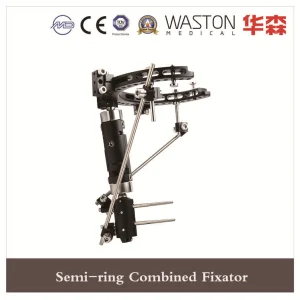
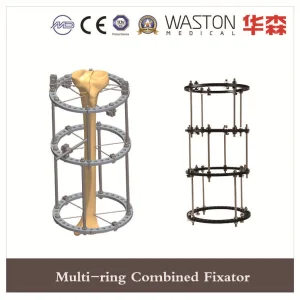
In the industrial application of external fixators, such as the Ilizarov system, K-wires are placed under high tension. This "tensioning" turns a thin wire into a rigid support beam. Any micro-fissure or surface defect on the wire could lead to a catastrophic failure under tension. This is why our quality control includes ultrasonic testing and high-magnification surface inspections to ensure 100% defect-free products before they are exported to our global partners.
The global demand for Threaded K-wires is also rising. These wires provide better "purchase" in cancellous bone, preventing the common issue of "pin migration." By integrating precision threading into our production line, we cater to complex orthopedic surgeries involving the small bones of the hands and feet. This technical versatility is what defines a top-tier manufacturer in the modern age.
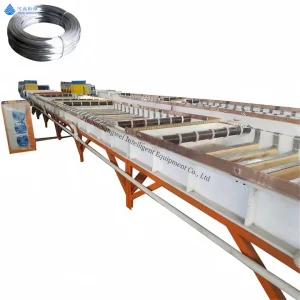
Lastly, we address the environmental and ethical standards of production. Our Heavy-Duty Electroplating Production Line (featured in our product list) uses eco-friendly filtration systems to ensure that our manufacturing footprint is minimized, meeting the ESG (Environmental, Social, and Governance) requirements of modern global procurement tenders.
 Daher Orthopedic Implants