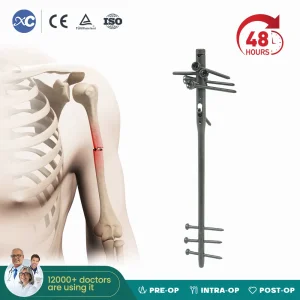
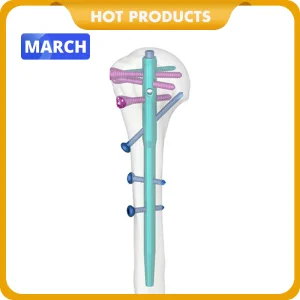
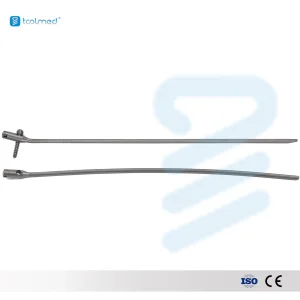
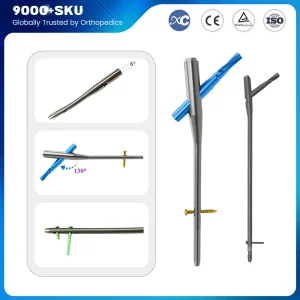
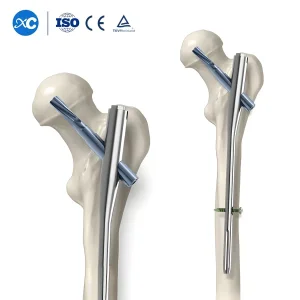
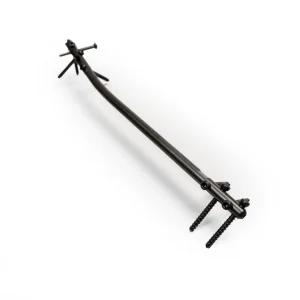
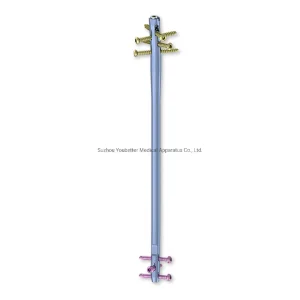
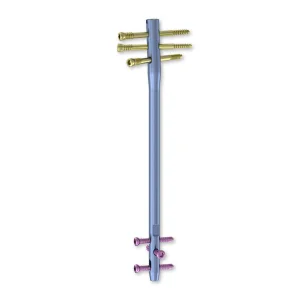
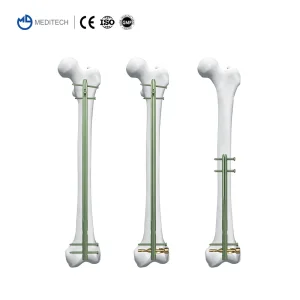
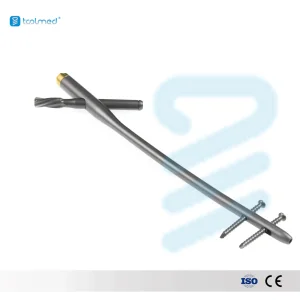
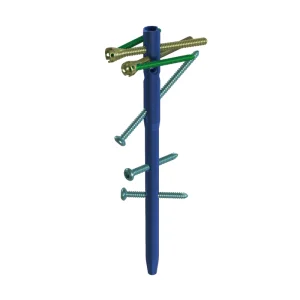
The global Humeral Intramedullary Nail market is currently undergoing a transformative phase, driven by the increasing incidence of humerus fractures due to road accidents, sports injuries, and an aging global population prone to osteoporosis. As an essential component in trauma surgery, intramedullary (IM) nailing has become the gold standard for stabilizing diaphyseal humeral fractures. Industrial data suggests that the demand for titanium-based interlocking nails is growing at a CAGR of 6.5%, with a specific focus on "multi-lock" systems that provide superior stability for proximal and distal bone fragments.
Major manufacturing hubs in China and Europe are leveraging AI-driven CAD/CAM technologies to produce nails with higher anatomical precision. The industry is shifting from generic sizes to patient-specific anatomical contours, reducing the need for intraoperative bending and minimizing soft tissue damage.
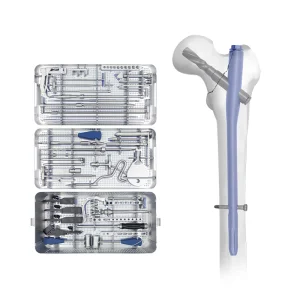
Global hospitals are increasingly seeking "Top 10" manufacturers who can provide a complete ecosystem—not just the nail, but the corresponding interlocking screws, instrument sets, and distal targeting systems. Manufacturers in China have optimized this vertical integration to offer rapid delivery cycles.
The industry is moving toward Intelligent Orthopedics. The integration of 3D printing and AI in the design of humeral intramedullary nails allows for thinner, stronger, and more flexible implants that mimic the natural elasticity of human bone. This reduces the "stress shielding" effect, promoting faster natural healing. Furthermore, the development of carbon-fiber reinforced PEEK (Polyetheretherketone) nails is an emerging trend for cancer-related pathological fractures, as they don't interfere with radiotherapy.
Procurement departments in major European and North American hospital groups prioritize ISO 13485 and CE/FDA compliance. However, there is a distinct shift toward cost-efficiency. As healthcare budgets tighten globally, surgical teams are looking for "Value-based Healthcare" solutions—implants that provide premium outcomes without the "Big Brand" price tag.
Localization is equally critical. In the Southeast Asian and African markets, humeral nails must be adapted to slightly smaller anatomical frames, whereas Western markets require larger diameters and longer lengths. As a leading manufacturer, we provide custom length and diameter options to ensure the perfect fit for diverse ethnic populations.

Our Global Distribution Network and Factory Strength
Choosing a Chinese factory for your Humeral Intramedullary Nail supply chain offers strategic advantages that go beyond simple cost savings. Over the last decade, China's medical device industry has undergone a quality revolution.
Utilizing German and Swiss-imported 5-axis CNC machines to ensure tolerances within microns.
Sourcing only medical-grade Titanium Alloys (Grade 5) with full biocompatibility certification.
The ability to modify designs and create private-label brands within weeks, not months.
We are dedicated to the research, development, production, and sales of orthopedic implants and tools. In the continuous process of design updates, we strive for excellence, meticulously crafting each product.
Our quality control philosophy: Quality and integrity first, striving for excellence, and pursuing the highest standards.
A professional R&D team and long-term technical exchanges with leading hospital experts ensure that our products function to their fullest potential. Our factory has passed ISO 9001 and ISO 13485 certifications. Our products exceed all international quality and safety standards, including CE and FDA certifications. For many years, our products have been exported to more than 70 countries and regions in Europe, America, Africa, and Southeast Asia.
Our professional team is dedicated to serving every customer. Your trust is the greatest recognition of our service. We will rely on high-quality products and continuously launch new marketable products based on market demand, achieving mutual benefit and win-win results with our customers.
 Daher Orthopedic Implants