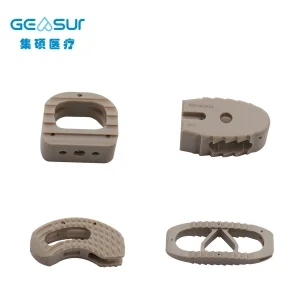
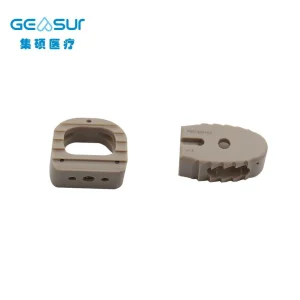
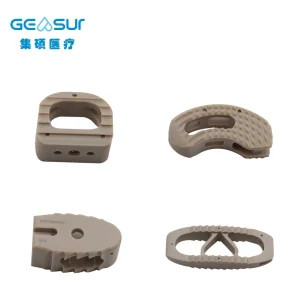
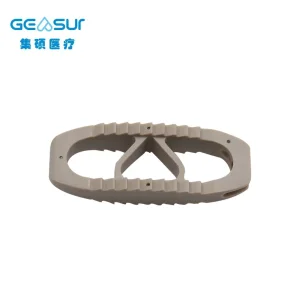
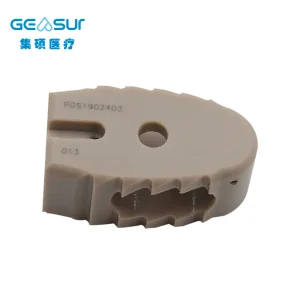
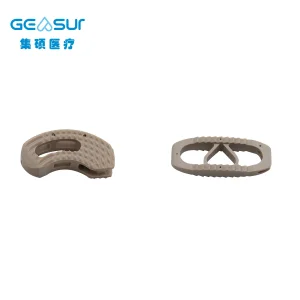
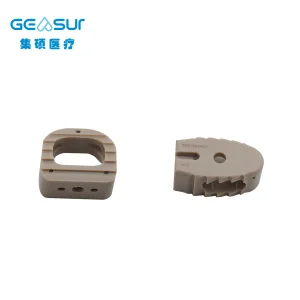
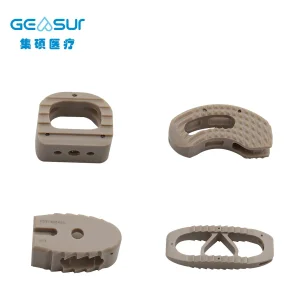
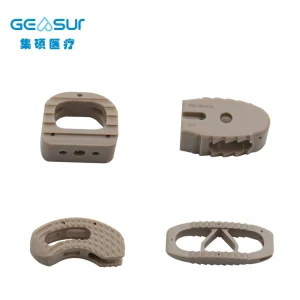
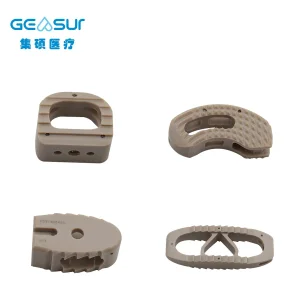
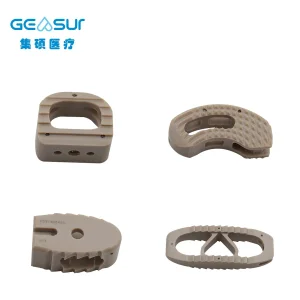
High-precision orthopedic implants for modern neurosurgery and orthopedic applications.
The global Cervical Interbody Cages market is witnessing a significant paradigm shift. Driven by an aging global population and the increasing prevalence of degenerative disc diseases (DDD), the demand for high-performance spinal implants has reached unprecedented levels. Historically, the market was dominated by medical device giants in North America and Europe. However, in recent years, China-based manufacturers have emerged as pivotal players, bridging the gap between high-end technological innovation and cost-effective production.
Technological integration such as 3D printed porous titanium structures and PEEK (Polyetheretherketone) materials with bioactive coatings (like Titanium plasma spray) are now the industry standards. These advancements are designed to enhance primary stability and promote rapid osseointegration, reducing recovery times for patients worldwide.
Current industrial trends indicate a strong move toward Minimally Invasive Surgery (MIS). This requires cages to be designed with narrower profiles and more sophisticated delivery systems, allowing surgeons to achieve fusion with minimal tissue disruption.

Modern clinics and ASCs (Ambulatory Surgery Centers) require implants that guarantee long-term stability and compatibility with advanced imaging like MRI and CT. Our PEEK cages provide excellent radiolucency for post-op monitoring.
Exporters and regional distributors look for partners who provide comprehensive regulatory support (CE, FDA, ISO) and consistent supply chains. We offer white-labeling and customized surgical instrument sets to fit local surgical habits.
From the anatomical differences in Asian vs. Western populations to specific surgical preferences in Latin America, our R&D team adapts cage dimensions and lordotic angles to meet localized clinical demands.
As a leading China-based manufacturer, we occupy a unique position in the global orthopedic supply chain. Our factory is not just a production site; it is a hub of innovation where advanced material science meets rigorous manufacturing standards. We offer several core advantages that set us apart from traditional exporters:
1. Vertical Integration: We control the entire process from raw material sourcing (Medical Grade PEEK and Titanium Alloy) to final sterilization and packaging. This ensures that every Cervical Interbody Cage leaving our facility meets the highest safety benchmarks.
2. Cost-Efficiency Without Compromise: By leveraging China’s mature industrial infrastructure and our proprietary manufacturing techniques, we provide premium orthopedic solutions at a fraction of the cost of Western competitors, making high-quality healthcare more accessible.
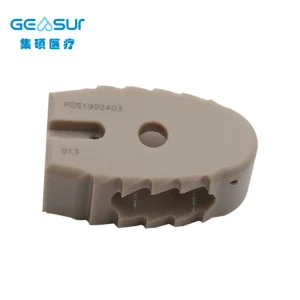
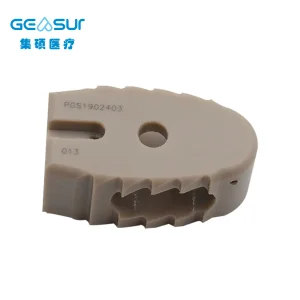
3. Rapid Prototyping: Our R&D team can turn clinical feedback into refined product designs within weeks. Whether it’s adjusting the serrated surface of a cage or modifying an instrument handle for better ergonomics, we move faster than the industry average.
4. Global Compliance: Our factory has passed ISO 9001 and ISO 13485 certifications. Our products exceed international quality and safety standards, including CE and FDA certifications, ensuring smooth entry into the most regulated markets.
5. Technical Exchange: We believe in the power of collaboration. We maintain long-term technical exchanges with leading hospital experts globally to ensure our products function to their fullest potential in real surgical environments.
We are dedicated to the research, development, production, and sales of orthopedic implants and tools. In the continuous process of design updates, we strive for excellence, meticulously crafting each product.
Our quality control philosophy: Quality and integrity first, striving for excellence, and pursuing the highest standards.
A professional R&D team and long-term technical exchanges with leading hospital experts ensure that our products function to their fullest potential.
Our products have been exported to more than 70 countries and regions in Europe, America, Africa, and Southeast Asia. Your trust is the greatest recognition of our service. We will rely on high-quality products and continuously launch new marketable products based on market demand, achieving mutual benefit and win-win results with our customers.
Explore our extensive range of CE-certified lumbar and cervical fusion systems.
In the early days of spinal fusion, stainless steel was the primary material. However, the industry has evolved toward materials that mimic the modulus of elasticity of human bone. Our PEEK (Polyetheretherketone) cages offer the advantage of being radiolucent, allowing surgeons to clearly see the bone growth during follow-up X-rays. To combine the strength of metal with the imaging benefits of PEEK, our Titanium-coated PEEK cages have become a preferred choice. The titanium coating creates a rough surface that encourages bone cells (osteoblasts) to attach directly to the implant, a process known as osseointegration.
When selecting a supplier, it is crucial to understand that different surgical techniques require specific cage geometries:
Our product range covers all these specialized needs, ensuring that whether a surgeon is performing an anterior cervical discectomy and fusion (ACDF) or a complex lumbar reconstruction, they have the right tools at their disposal.
The next frontier in Cervical Interbody Cage manufacturing is 3D printing. This allows for the creation of complex lattice structures that can be filled with bone graft material. As a forward-thinking factory, we are constantly investing in Additive Manufacturing (AM) to stay ahead of the curve, providing exporters with the most advanced "AI-designed" orthopedic solutions in the market.
 Daher Orthopedic Implants