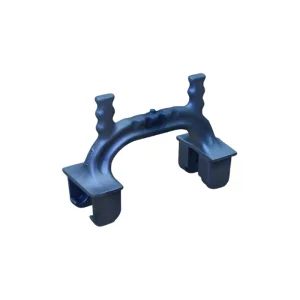
Product Overview
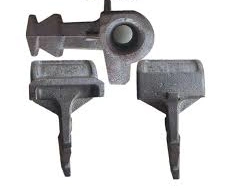
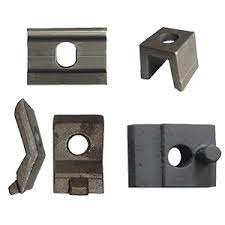
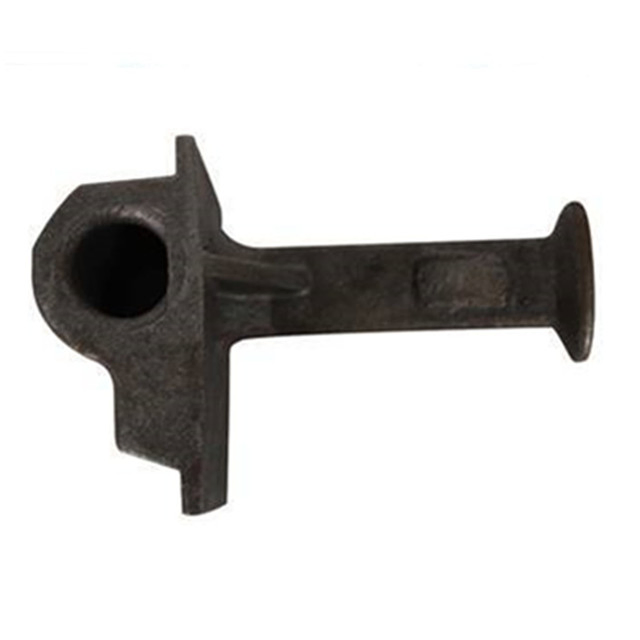
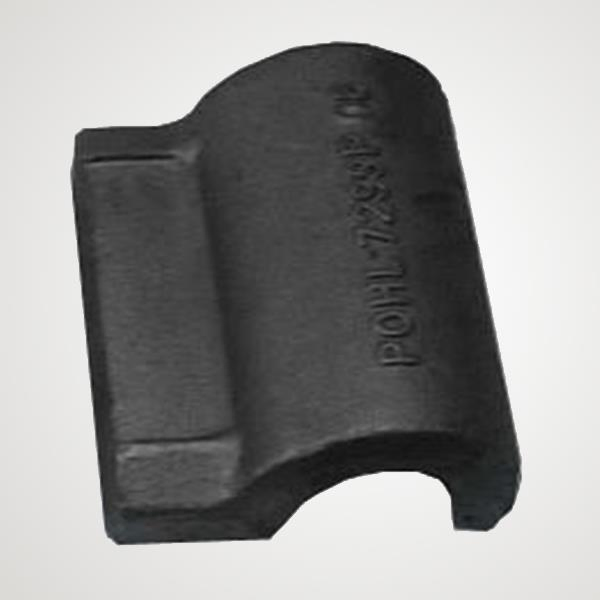
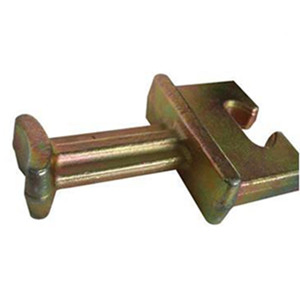
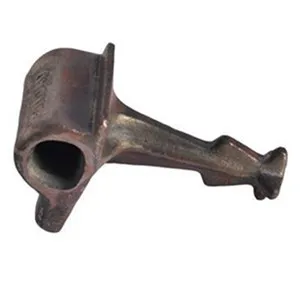
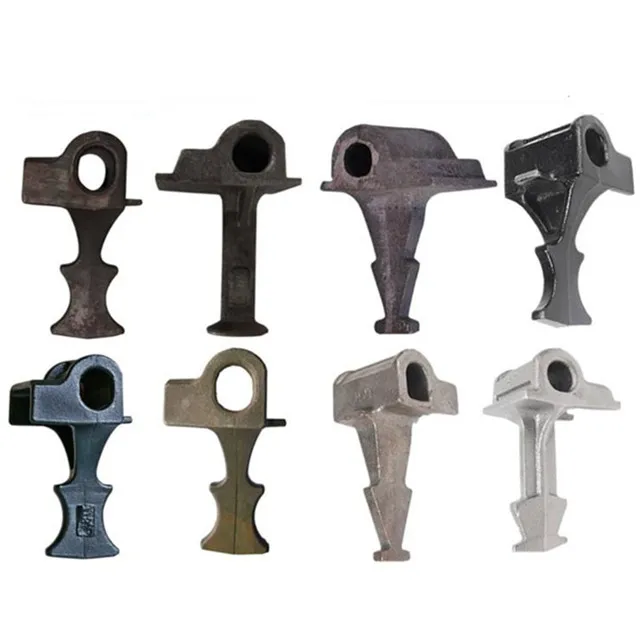
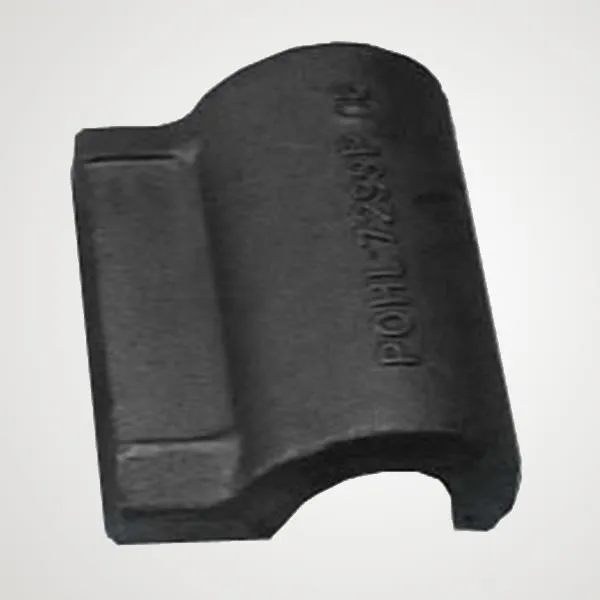
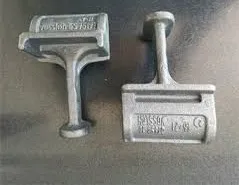
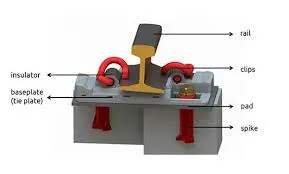
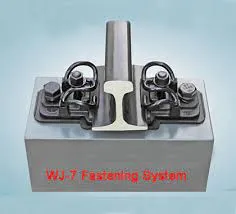
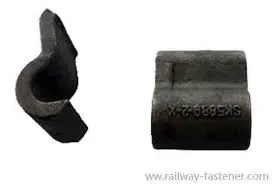
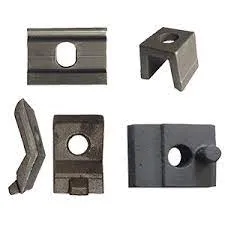
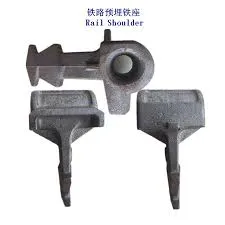
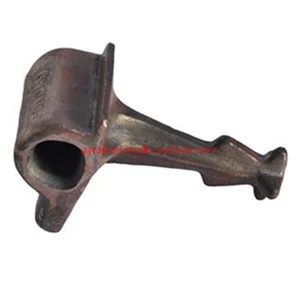
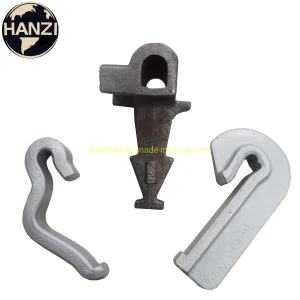
Rail shoulder is cast in the concrete rail ties to fix the elastic rail clips. There are two types of rail shoulders available: the cast-in shoulder and the weld-on shoulder, both of which are used for the fixing of elastic rail clips. The casting shoulders, as the embedded part of the railway fastening system, are pressed in concrete sleepers and work together with the E clip to fasten the rail.
| Application |
UIC54 |
UIC60 |
115RE, 50kg, 60kg, BS80lbs, BS100lbs |
| Material Name |
QT500-7 |
QT450-10 |
QT400-15 |
| Standard |
GB 1348-88 |
GB 1348-88 |
GB 1348-89 |
| Tensile Strength |
≥500 Mpa |
≥450 Mpa |
≥400 Mpa |
| Hardness |
170~230HB |
160~210HB |
130~180HB |
Cast-in Rail Shoulder Mechanical Property
| Material |
Tensile Strength (Mpa) |
Yield Strength (Mpa) |
Elongation (%) |
| QT400-15 (GGG40) |
400 |
250 |
15 |
| QT450-10 (GGG45) |
450 |
310 |
10 |
| QT500-7 (GGG50) |
500 |
320 |
7 |
Weld-on Rail Shoulder Features
The weld-on shoulder is used at the typical position of rail where the rail shoulder is welded on a flat steel plate rather than the standard tie plate. Production is via hot forging according to AREA standards. The steel material can be low or medium carbon steel, providing a cost-effective solution for switch and crossing layouts where vertical rail geometry is employed.
Frequently Asked Questions
What are the primary functions of a rail shoulder?
Rail shoulders are embedded in concrete ties to provide a secure fixing point for elastic rail clips, ensuring the rail remains stable and properly fastened to the sleeper.
What is the difference between cast-in and weld-on shoulders?
Cast-in shoulders are embedded directly into concrete sleepers during casting, while weld-on shoulders are welded onto flat steel plates or steel sleepers, often used in switch and crossing layouts.
What materials are used for manufacturing rail shoulders?
Cast-in shoulders are typically made from ductile iron (e.g., QT500-7, QT450-10), while weld-on shoulders are fabricated from low or medium carbon steel through hot forging.
Which international standards do your rail shoulders comply with?
Our products meet various global standards including GB/T 1348, ISO 1038, NF EN 1563, DIN 1693, and AREA standards for forged components.
What is the daily production capacity for these components?
The production facility has a high capacity of approximately 20,000 pieces per day to meet large-scale infrastructure requirements.
Are the shoulders compatible with different rail types?
Yes, they are designed for various rail profiles including UIC54, UIC60, 115RE, and several BS (British Standard) rail weights.
 Daher Orthopedic Implants