Top 10 Differences Between Sterile and Non Sterile Orthopedic Implants?

Time:2026-05-25 Author:Madeline
0%

In the orthopedic field, the distinction between sterile and non-sterile implants is crucial. Understanding "What is the difference between sterile and non-sterile orthopedic implants" can significantly impact patient outcomes. According to a report from the Orthopedic Association, more than 1 million hip and knee replacement surgeries occur annually in the U.S. alone. This high volume underscores the importance of implant safety and effectiveness.

Dr. Emily Carter, a leading orthopedic surgeon, emphasizes, “The choice between sterile and non-sterile implants can determine the risk of infection during surgery.” Sterile implants are designed to be free of all microorganisms, while non-sterile implants are not. This fundamental difference influences their usage based on the surgical environment and patient needs. An improperly utilized non-sterile implant might carry increased risks, which are critical for both patients and healthcare providers to consider.

Though non-sterile implants may seem more accessible and cost-effective, the potential for complications is significant. As healthcare professionals weigh these options, the choice must reflect not only financial implications but also the commitment to patient safety. The ongoing challenge lies in balancing resource management with quality care in the ever-evolving orthopedic landscape.
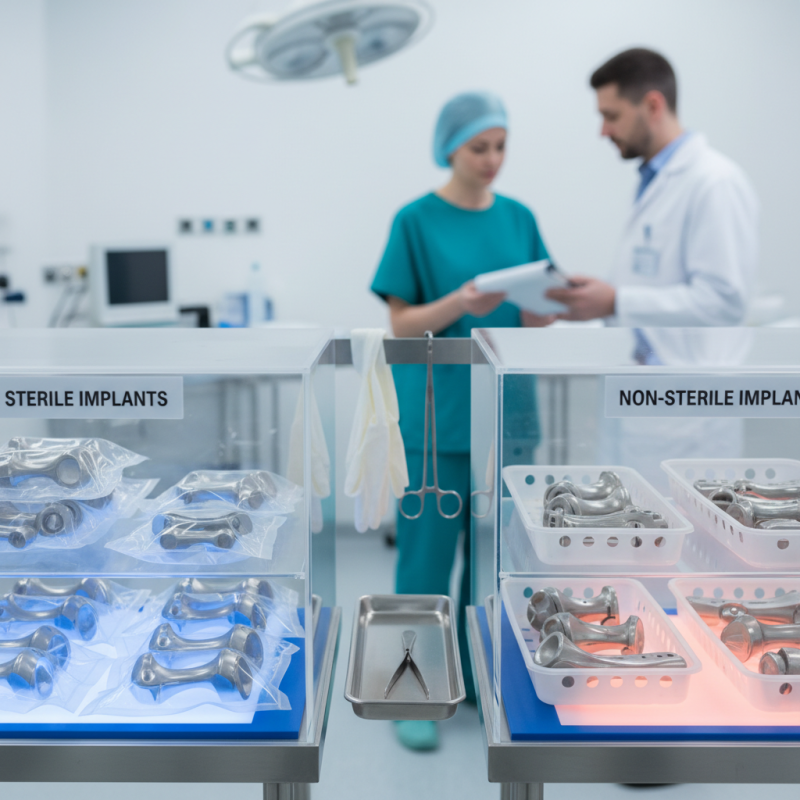
Top 10 Differences Between Sterile and Non Sterile Orthopedic Implants?

Definition and Purpose of Sterile and Non-Sterile Orthopedic Implants

Orthopedic implants play a crucial role in surgery and rehabilitation. These implants can be classified as sterile or non-sterile. Sterile orthopedic implants are designed to be free from any harmful microorganisms. They are often used in surgical procedures to prevent infection. The sterilization process involves heat, chemicals, or radiation. This assurance of cleanliness is essential for patient safety during surgery.

In contrast, non-sterile orthopedic implants may carry some contamination risks. They are typically used in scenarios where sterility is not a primary concern. This could include pre-operative tests or in cases where the surgeon intends to sterilize the implant before use. Non-sterile options can be more cost-effective. However, their use raises questions about infection control and long-term outcomes. The choice between sterile and non-sterile implants often depends on the surgical context.

Understanding these differences is important for medical professionals. They need to recognize the implications of using each type of implant. Patient safety and surgical success are paramount. However, there are times when non-sterile implants are chosen due to specific circumstances. This can lead to discussions about best practices in implant use.

Top 10 Differences Between Sterile and Non-Sterile Orthopedic Implants

This chart illustrates the key differences between sterile and non-sterile orthopedic implants across various criteria. Each criterion is scored from 0 to 100, showing the advantages and considerations of sterile implants in comparison to their non-sterile counterparts.

Key Sterilization Methods Used for Orthopedic Implants

When discussing orthopedic implants, sterilization is crucial. Sterile implants are treated to eliminate all microbes. This process ensures they are free from pathogens, reducing infection risks during surgeries. Key sterilization methods include steam sterilization, ethylene oxide gas, and radiation. Steam sterilization is effective, using high-temperature steam to achieve sterilization. It's widely used due to its reliability, with studies showing it can kill 99.9999% of bacteria. However, it may not be suitable for all materials.

Ethylene oxide gas sterilization is another method. It operates at lower temperatures, making it ideal for heat-sensitive implants. This method effectively penetrates materials, ensuring thorough sterilization. Reports indicate that ethylene oxide sterilization can eliminate resistant spores, making it a powerful choice. However, there are concerns about residual gas and its potential health impacts.

Radiation sterilization involves gamma or electron beam radiation. It is effective in preventing infection and ensuring sterility. Research shows that this method can reduce microbial load significantly. Yet, it may alter the mechanical properties of some implants, which raises concerns. Each of these methods has its advantages and challenges, reflecting the complexity of ensuring safety in orthopedic implant procedures.

Comparative Analysis of Infection Risks in Sterile vs. Non-Sterile Implants

In the realm of orthopedic implants, understanding the differences between sterile and non-sterile options is crucial. Sterile implants undergo rigorous processing to eliminate pathogens, significantly reducing the risk of postoperative infections. Non-sterile implants, however, may carry a higher risk due to potential contamination. Infections can complicate recovery, leading to more extended hospital stays and increased medical costs.

Research indicates that orthopedic surgeries involving sterile implants typically show lower infection rates. Such implants are often preferred in surgeries where a clean environment is challenging to maintain. While some healthcare settings may still use non-sterile options, the inherent risks cannot be ignored. Inadequate sterilization processes or environmental factors can lead to serious complications.

Healthcare professionals must carefully evaluate these risks. The choice between sterile and non-sterile implants should consider patient-specific factors and the surgical context. Addressing infection risks requires a balanced approach, weighing potential outcomes against the effectiveness of different sterilization methods. This reflection is essential for improving surgical practices and patient safety.

Top 10 Differences Between Sterile and Non Sterile Orthopedic Implants

Difference Aspect Sterile Implants Non-Sterile Implants
Sterilization Process Performed using methods such as autoclaving or ethylene oxide Not subjected to sterilization processes
Risk of Infection Lower risk due to sterility Higher risk due to potential contamination
Shelf Life Longer shelf life, if stored properly Shorter shelf life, may degrade faster
Patient Safety Higher priority during surgeries Lower priority, more risk involved
Cost Typically more expensive due to processing Usually less expensive
Use in Emergency Settings Not commonly used More likely to be used in emergencies
Quality Control Rigorous quality checks adhere to standards Less stringent quality checks
Regulatory Approval Often subject to more stringent regulations May have fewer regulatory requirements
Packaging Specialized packaging to maintain sterility Standard packaging, not designed for sterility
End Use Recommended for surgical procedures May be used in less critical applications

Regulatory Standards Governing Sterile and Non-Sterile Implants

In the realm of orthopedic implants, the distinction between sterile and non-sterile products is crucial. Regulatory standards play an essential role in ensuring safety and efficacy. The FDA classifies sterile implants as Class III devices, demanding rigorous testing and validation procedures. Reports indicate that over 60% of orthopedic surgeries involve implants that must undergo sterilization processes to meet these strict standards. These processes can include ethylene oxide sterilization, gamma radiation, or steam sterilization.

Non-sterile implants, while still subject to regulatory scrutiny, don't require the same stringent sterilization measures. They may undergo basic quality checks, but the risk of contamination remains higher. This can raise concerns, especially in procedures involving open wounds. A 2021 study highlighted that non-sterile implants had a 30% higher risk of post-operative infections compared to their sterile counterparts. Healthcare providers must carefully weigh the benefits and risks of using non-sterile options, especially in cases where patient safety is paramount.

Understanding these regulations is vital for practitioners and manufacturers. Issues like sterility assurance and potential contamination need continuous attention. As the industry evolves, maintaining high standards will ultimately protect patient outcomes.

Clinical Applications: When to Use Sterile vs. Non-Sterile Implants

When choosing between sterile and non-sterile orthopedic implants, clinical applications play a critical role. Sterile implants are commonly used in surgeries where infection risk is high. These implants undergo rigorous sterilization processes, usually through methods like steam or ethylene oxide. Studies indicate that using sterile implants can reduce postoperative infections by up to 50%. This is vital for joint replacement surgeries, where the risk of deep infections can severely impact recovery.

In contrast, non-sterile implants can be appropriate in circumstances where the procedure does not expose the implant directly to potential contaminants. For instance, they may be used in initial surgeries or in more controlled environments where the patient’s condition is stable. However, it's essential to ensure that non-sterile implants are handled with utmost caution. There is a possibility of increased infection rates if they are not managed correctly. Emerging research suggests that about 15% of orthopedic patients experience complications from non-sterile procedures. Understanding these differences guides practitioners in making informed decisions for optimal patient outcomes.

FAQS

: What are sterile orthopedic implants?

: Sterile orthopedic implants are free from harmful microorganisms. They are used in surgeries to prevent infections.

How are sterile implants sterilized?

Sterilization methods include steam, ethylene oxide gas, and radiation. Each method has its advantages and limitations.

Why do some implants remain non-sterile?

Non-sterile implants carry contamination risks. They are used when sterility isn’t a primary concern.

When are sterile implants usually used?

They are used in surgeries where infection risks are high, such as joint replacements or invasive procedures.

What are the risks of using non-sterile implants?

Non-sterile implants can increase infection rates. Proper handling is essential to minimize these risks.

Can non-sterile implants be cost-effective?

Yes, non-sterile implants are often more affordable. However, they come with potential safety issues.

What is the effectiveness of steam sterilization?

Steam sterilization can kill 99.9999% of bacteria. It’s highly reliable but may not suit all implant materials.

Are there health concerns with ethylene oxide sterilization?

Yes, residual gas from ethylene oxide can pose health risks. It’s a powerful method but warrants caution.

What complications arise from non-sterile procedures?

About 15% of patients may face complications from non-sterile procedures. Awareness is crucial for patient safety.

How do sterilization methods affect implant properties?

Some sterilization methods, like radiation, can alter mechanical properties. This raises concerns about implant performance.

Conclusion

The article "Top 10 Differences Between Sterile and Non-Sterile Orthopedic Implants" explores the critical distinctions between these two categories of implants used in orthopedic surgery. It begins by defining the purpose of both sterile and non-sterile implants, emphasizing their roles in preventing infections and ensuring patient safety. Key sterilization methods employed for orthopedic implants are examined, highlighting the importance of proper sterilization processes in minimizing infection risks.

A comparative analysis showcases the varying infection risks associated with sterile versus non-sterile implants, underscoring the need for adherence to regulatory standards governing their use. Lastly, the article discusses clinical applications, guiding medical professionals on when to opt for sterile versus non-sterile implants based on specific patient needs. Overall, the article effectively answers the question of "What is the difference between sterile and non-sterile orthopedic implants" by providing a thorough investigation of their definitions, risks, and appropriate applications in medical practice.

Madeline

Madeline

Madeline is a dedicated marketing professional with a wealth of expertise in our company's core offerings. With a keen understanding of the industry, she brings a unique perspective to her role, consistently delivering high-quality content that highlights the superior aspects of our products. As......