Customizing Orthopedic Implants 5 Essential Tips for Buyers?

Time:2026-06-04 Author:Mason
0%

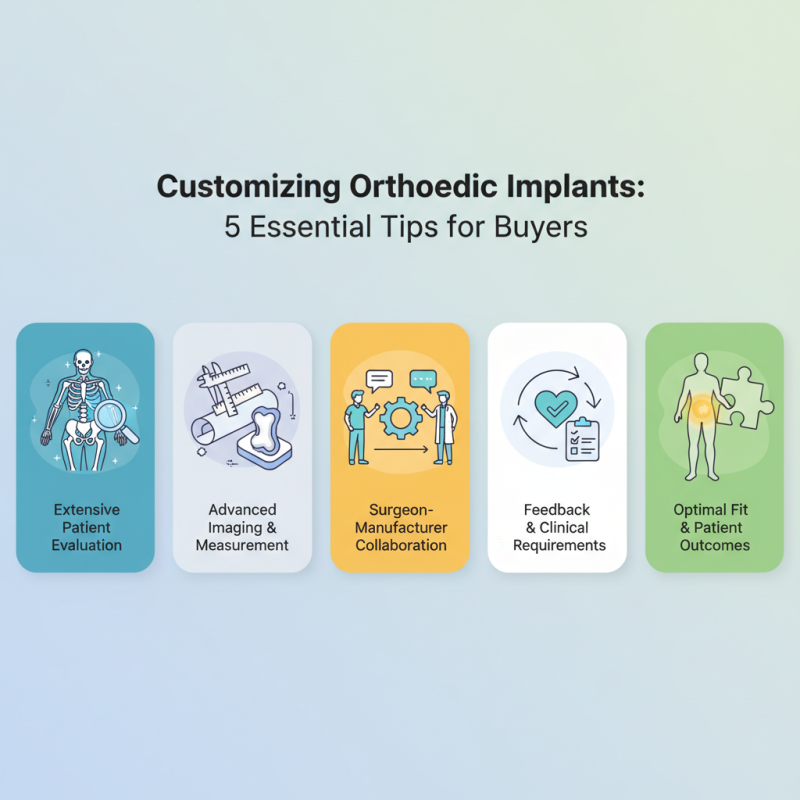
In the field of orthopedics, the need for tailored solutions is paramount. Customizing orthopedic implants can significantly enhance patient outcomes. Buyers often wonder, “What is the process of customizing orthopedic implants for specific needs?” Understanding this process can lead to better decisions.

The customization begins with extensive evaluations of the patient's anatomy and needs. Medical professionals leverage advanced imaging techniques for accurate measurements. This stage is crucial; even small errors can impact the fit and function of the implant. Buyers should prioritize companies that emphasize precision in this phase.

Furthermore, collaboration between surgeons and manufacturers is key. Feedback loops ensure that the implants meet clinical requirements. This synergy can sometimes be overlooked, leading to less effective solutions. Buyers need to critically assess the communication and support offered by implant providers. A thorough understanding of the customization process is essential for achieving optimal results.
Customizing Orthopedic Implants 5 Essential Tips for Buyers?

Understanding the Importance of Custom Orthopedic Implants in Surgery

Custom orthopedic implants play a crucial role in surgical procedures. They are specifically designed to meet the unique anatomical needs of patients. Customization ensures a better fit, leading to improved recovery outcomes. According to a report by the Orthopedic Research Society, personalized implants can reduce the risk of complications by up to 30%. This statistic underscores the importance of tailored solutions in orthopedic surgery.

When discussing the necessity of custom implants, we should also consider the evolution of technology. Advances in 3D printing have made it possible to create implants that match individual bone structures precisely. A study published in the Journal of Orthopedic Surgery found that patients with custom implants had a median recovery time of 25% less than those fitted with standard options. However, the process can be expensive, and some patients might face affordability challenges.

Not all surgeons are skilled in customization. This variance can lead to suboptimal outcomes. It is essential for patients to communicate openly with their doctors about their specific needs and concerns. A clear understanding of the customization process is vital for achieving the best results in surgery. While there are benefits, potential drawbacks need to be critically evaluated.

Evaluating Biocompatibility: Key Materials for Custom Implants

When customizing orthopedic implants, evaluating biocompatibility is crucial. The materials used in these implants should interact favorably with human tissue. For instance, titanium is widely recognized for its excellent biocompatibility. Reports suggest that less than 5% of patients experience adverse reactions to titanium implants. However, the variability in individual responses can still pose challenges.

Polymers like PEEK (polyether ether ketone) are gaining popularity due to their unique properties. They provide flexibility and toughness, mimicking natural bone. A recent study showed that PEEK improved patient outcomes in spinal fusion surgeries. Still, further research is needed to fully understand its long-term effects.

Ceramics also play a vital role in the biocompatibility discussion. Hydroxyapatite coatings enhance bond strength between the bone and the implant. Interestingly, while ceramics exhibit excellent compatibility, they can be brittle. This raises questions about their use in load-bearing applications. Therefore, buyers must carefully consider the materials and their respective properties when customizing implants.

Customizing Orthopedic Implants: 5 Essential Tips for Buyers

Material Biocompatibility Common Uses Advantages Considerations
Titanium Excellent Joint replacements, screws Lightweight, strong, corrosion resistant Higher cost
Cobalt-Chromium Alloy High Hip implants, dental prosthetics Excellent strength, wear resistance Potential for allergic reactions
Polyethylene Good Articulating surfaces, liners Low friction, affordable Wear over time
Ceramics Very high Hip replacements, dental implants Excellent wear resistance, biocompatible Brittle, potential for fracture
Stainless Steel Good Fracture fixation, plates Cost-effective, strong Corrosion under certain conditions

Assessing Patient-Specific Factors in Implant Customization

Customizing orthopedic implants requires comprehensive assessment of patient-specific factors. Each individual has unique anatomical and physiological characteristics. These differences must guide the customization process. According to a study by the Journal of Orthopedic Research, patient-specific adaptations can enhance implant integration and functionality, reducing the need for revision surgeries by up to 30%.

One crucial aspect to consider is bone density. Variations in bone quality affect implant selection and positioning. For instance, patients with osteoporosis may require special materials or designs that offer greater support and fixation. Additionally, demographic factors such as age, activity level, and comorbidities can influence outcomes. Surgeons must actively engage with patients to gather relevant information. This proactive communication fosters trust and ensures alignment.

Imperfect data and measurements can lead to complications. Not every customization attempt results in success. Surgeons must remain vigilant and open to feedback, adjusting techniques as needed. Overreliance on technology without understanding patient needs can jeopardize results. Continuous training and education in the latest trends are essential for maintaining best practices in implant customization.

Patient-Specific Factors in Orthopedic Implant Customization

Analyzing the Cost-Benefit Ratio of Customized vs. Standard Implants

When considering the cost-benefit ratio of customized orthopedic implants versus standard options, several factors come into play. Customized implants can provide better alignment and fit, which may reduce recovery time. Studies indicate that patients with custom implants experience 30% fewer complications compared to those with standard models. However, the initial costs for these tailored solutions can be 15-30% higher.

Economists in the orthopedic field suggest assessing long-term costs. A report by the Journal of Bone and Joint Surgery reveals that while custom implants are pricier upfront, they may lead to lower overall healthcare costs due to reduced revision surgeries. In fact, every avoided revision surgery can save healthcare systems up to $40,000 per case. Patients must weigh these potential savings against the initial investment.

It's important to recognize the variability in outcomes. Not every patient benefits equally from customized solutions. Some reports indicate that about 20% of patients do not experience significant improvements with custom implants. Moreover, the technology used in customization is constantly evolving, which may lead to uneven quality across providers. This makes it essential for buyers to thoroughly research and consult with specialists to make informed decisions.

Future Trends: Innovations in 3D Printing for Orthopedic Implants

The future of orthopedic implants is being transformed by innovations in 3D printing. This technology allows for the creation of customized implants that match individual patient anatomy. According to a recent report by Smith & Nephew, the global market for 3D-printed orthopedic implants is expected to reach $1.3 billion by 2026, growing at a CAGR of 20%. This growth reflects the increasing demand for tailored solutions in orthopedic surgery.

3D printing offers precise replication of complex bone structures. Surgeons can utilize CT scans to design implants that perfectly fit unique anatomical features. However, the technology is not without challenges. Quality control and material fatigue remain concerns. There's a need for ongoing research to improve the reliability of printed materials.

Additionally, patient outcomes can vary. While many experience significant improvements, not everyone responds positively to 3D-printed implants. This highlights the importance of thorough clinical evaluations and long-term studies. As 3D printing shapes the future of orthopedic implants, balancing innovation with a critical assessment of outcomes will be crucial.

FAQS

: Why is patient-specific assessment important in implant customization?

: Each patient has unique anatomical features that must guide the customization process. This can enhance implant integration.

How does bone density affect implant selection?

Bone density variations influence how an implant is chosen and positioned. Patients with osteoporosis may need special designs.

What role does patient communication play in surgery?

Active patient engagement helps gather relevant information. It fosters trust and aligns expectations between the patient and surgeon.

Are customized implants worth the initial higher cost?

Yes, they may lead to lower overall healthcare costs by reducing revision surgeries. Each avoided revision can save significant funds.

Can everyone expect improvements from customized implants?

No, around 20% of patients may not see significant benefits from custom implants. Individual outcomes can vary widely.

What challenges does 3D printing face in orthopedic implants?

Quality control and material fatigue are concerns. Ongoing research is necessary to improve the reliability of these implants.

How do 3D-printed implants match patient anatomy?

Surgeons use CT scans to design implants that closely match individual bone structures, providing a more tailored fit.

What is the potential growth of 3D-printed orthopedic implants?

The market is expected to reach $1.3 billion by 2026, driven by the increased demand for customized solutions.

Why is continuous training important for surgeons?

Staying updated on trends is essential for successful implant customization. Techniques must adapt to evolving technology.

What can go wrong during implant customization?

Imperfect data and measurements may lead to complications. Not every attempt at customization achieves the desired outcome.

Conclusion

Customizing orthopedic implants is a critical process that enhances surgical outcomes by tailoring devices to meet individual patient needs. What is the process of customizing orthopedic implants for specific needs involves understanding the importance of these implants, evaluating biocompatible materials, and assessing patient-specific factors such as anatomy and lifestyle. Buyers should consider how customization can improve alignment and functionality compared to standard implants.

Additionally, analyzing the cost-benefit ratio between customized and standard options can aid in making informed purchasing decisions. As technology advances, future trends like innovations in 3D printing are set to revolutionize the customization process, allowing for even greater precision and personalization in orthopedic treatments. By staying informed about these aspects, buyers can make choices that significantly impact patient recovery and quality of life.

Mason

Mason

Mason is a seasoned marketing professional with a deep expertise in the company's offerings and a passion for driving brand awareness. With a strong background in digital marketing strategies, he has an innate ability to connect with diverse audiences and effectively communicate product benefits.......