Orthopedic implants must do more than restore movement. They must remain compatible with living tissue under years of load, fluid exposure, and wear. What factors affect the biocompatibility of orthopedic implants is therefore a practical question for surgeons, engineers, manufacturers, and patients in China. The answer includes material chemistry, surface finish, corrosion resistance, wear particles, sterilization residues, and the body’s immune response. Small details matter. A rough edge or altered coating can change how cells and tissue interact with an implant.
Professional surveillance helps frame these questions. The National Joint Registry’s 21st Annual Report (2024) tracks large numbers of hip and knee procedures and their long-term outcomes, including revisions. Such data can reveal performance patterns, but revision is not a direct measure of biocompatibility. It may also reflect surgical technique, infection, patient activity, or implant design. That distinction is important. The U.S. Food and Drug Administration’s ISO 10993-1 guidance also emphasizes biological evaluation within a device’s risk-management process, rather than relying on one test alone. For China’s orthopedic sector, evidence should likewise connect laboratory testing with clinical follow-up and clearly documented manufacturing controls.
This article examines ten factors that can influence implant–tissue compatibility, from titanium and cobalt-chromium alloys to polyethylene debris and surface treatments. It also considers how testing, patient characteristics, and implantation conditions shape real-world results. No material is perfect. Biocompatibility is not a permanent label; it is an evidence-based judgment that can change as devices, data, and clinical experience evolve.
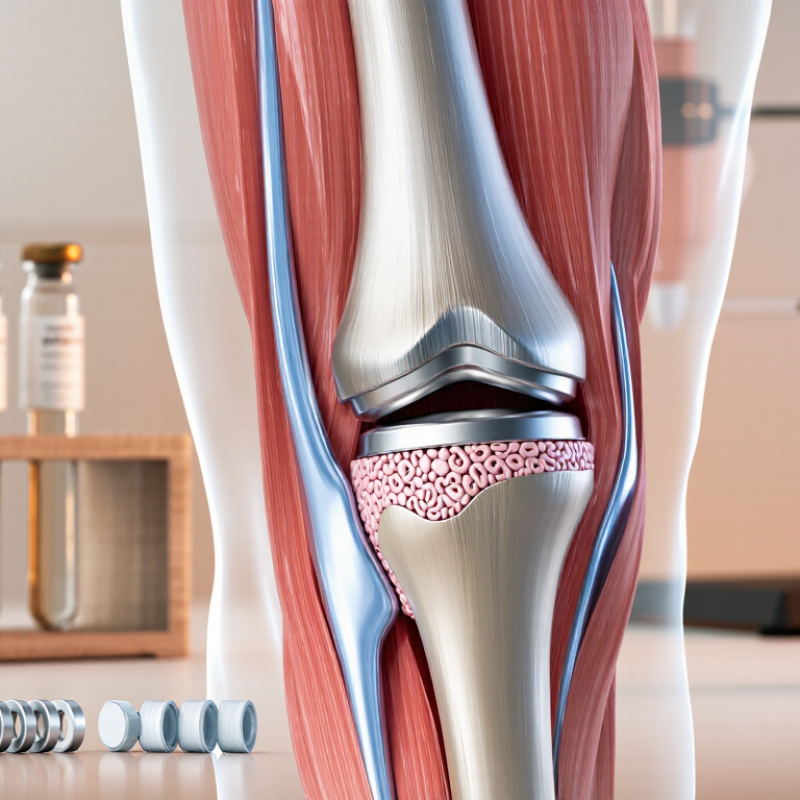
Biocompatibility is not simply a claim that an implant is “safe.” It asks how its materials interact with the body over time, including bone, blood, and surrounding tissue. In China, GB/T 16886.1-2022 provides a risk-based framework for biological evaluation, aligned with ISO 10993-1:2018. Testing may consider the device’s materials, contact duration, wear particles, corrosion, and manufacturing residues. The exact assessment depends on the implant and its intended use.
The need for careful evaluation is tangible. A 2020 Global Burden of Disease analysis, published in The Lancet Rheumatology, estimated that 1.71 billion people worldwide lived with musculoskeletal conditions in 2019. That figure is not an implant forecast, but it shows the scale of conditions that may lead to orthopedic care. For a hip or knee implant, clinicians and evaluators look beyond the original material: tiny debris from years of movement may affect local tissue, while metal ions can require attention in certain designs. Small details matter.
A test result is not the whole story. Laboratory evidence supports assessment, but it cannot reproduce every patient’s biology, surgical technique, or decades of wear. That limitation deserves attention. For Chinese patients, biocompatibility means weighing documented material performance alongside clinical follow-up, implant design, and individual health factors—not treating one test as a lifetime guarantee.
China Top 10 Orthopedic Implants Biocompatibility Factors?
How Chinese Regulations Guide Biocompatibility Assessment
China’s NMPA framework expects a product-specific biological safety assessment, not a copied test checklist. Applicants should identify an implant’s materials, manufacturing residues, sterilization method, and type of body contact. The GB/T 16886 series provides commonly used guidance aligned with ISO 10993. Confirm current applicable editions and registration requirements before planning tests.
For a hip stem or bone plate, reviewers consider where the device contacts the body and for how long. A biological evaluation may address cytotoxicity, sensitization, irritation, systemic effects, and implant-related responses. Chemical characterization and toxicological assessment can help explain material risks. Testing is not automatically required for every endpoint; existing evidence may be sufficient when its relevance is clearly justified. Small process changes can matter. A new coating or cleaning step may alter exposure.
Tips: Keep a traceable file linking each hazard to evidence, test results, and a reasoned conclusion. Record supplier and process changes, too. Teams sometimes underestimate these details. That deserves another look.
| Biocompatibility factor | Assessment focus for orthopedic implants | How the Chinese framework guides assessment |
|---|---|---|
| 1. Intended use and contact profile | Define whether the device contacts bone, soft tissue, or blood, and whether contact is limited or long-term. Many joint replacements and fixation implants are intended for prolonged or permanent implantation. | GB/T 16886.1 provides a risk-management framework for selecting biological endpoints based on the device’s nature and duration of contact. The assessment should reflect the finished device and its intended clinical use. |
| 2. Material identity and characterization | Document materials, grades, coatings, additives, impurities, and relevant processing aids. Characterize metallic, polymeric, ceramic, and composite components as appropriate. | GB/T 16886.18 addresses chemical characterization, while GB/T 16886.1 places biological evaluation within risk management. Material and process information helps justify which tests or other evidence are needed. |
| 3. Chemical substances and leachables | Evaluate substances that may be released from the device, including residual monomers, processing residues, corrosion products, and coating-related substances. Consider exposure over the intended service period. | GB/T 16886.17 covers the establishment of allowable limits for leachable substances. Chemical characterization and toxicological risk assessment can help determine whether further testing or controls are warranted. |
| 4. Cytotoxicity | Assess whether device materials or extracts adversely affect cultured cells. Sample preparation should represent the finished device and be suitable for the selected test method. | GB/T 16886.5 describes in vitro cytotoxicity methods, and GB/T 16886.12 addresses sample preparation and reference materials. Results should be interpreted as part of the overall biological risk evaluation. |
| 5. Irritation and sensitization | Consider local irritation and the potential to induce an allergic response, including risks associated with material constituents, residues, and degradation products. | The GB/T 16886 series includes methods for irritation and skin sensitization. Endpoint selection should be justified for the implant’s contact type and exposure, rather than applied as a one-size-fits-all test list. |
| 6. Local tissue response after implantation | Evaluate local tissue effects at the implant site, including responses to the material, surface, coating, and any products formed during use or degradation. | GB/T 16886.6 addresses local effects after implantation. The study design and relevance of the model should be justified in relation to the intended anatomical site and device characteristics. |
| 7. Systemic toxicity and longer-term hazards | Consider whether released substances could cause acute or longer-term systemic effects. Depending on materials and exposure, genotoxicity or other specific hazards may also need consideration. | Relevant parts of the GB/T 16886 series include systemic toxicity and genetic toxicology. The risk assessment should explain the rationale for the endpoints selected and the evidence used. |
| 8. Degradation, wear, and corrosion | Assess foreseeable material breakdown, wear particles, corrosion products, and changes to coatings or polymers during the device’s intended use. These may affect both local and systemic biological risks. | GB/T 16886.9 provides a framework for identifying and quantifying potential degradation products. Mechanical and materials evidence can inform biological testing and the evaluation of long-term exposure. |
| 9. Manufacturing, cleaning, and sterilization residues | Consider residues or changes arising from manufacturing, cleaning, packaging, and sterilization. For ethylene oxide sterilized devices, assess residual ethylene oxide and relevant by-products. | GB/T 16886.7 addresses ethylene oxide sterilization residuals. Evaluation should use the final, processed device or otherwise justify how test samples represent it. |
| 10. Risk management, evidence, and change control | Bring together test results, literature, material history, clinical experience where relevant, and manufacturing information. Reassess biological risks when materials, suppliers, processes, or sterilization change. | China’s medical-device regulatory framework, including the Regulations on the Supervision and Administration of Medical Devices, supports registration review against applicable requirements and technical guidance. GB/T 16886.1 emphasizes a documented, risk-based evaluation; applicable standards and product-specific guidance should be checked for each submission. |
Note: GB/T 16886 standards are part of China’s national standards series for biological evaluation of medical devices. The applicable editions, product-specific requirements, and evidence strategy should be confirmed for the device and its intended use.
China Top 10 Orthopedic Implants Biocompatibility Factors?
An implant’s compatibility depends on more than its base material. Material chemistry matters, since trace elements or additives may affect local tissue responses. Surface texture also plays a role: a roughened surface can support bone attachment, but excessive roughness may complicate cleaning or testing. Small details matter. Corrosion resistance is important in body fluids, while wear particles from moving parts can irritate surrounding tissue over time.
The immune response varies between patients and implant sites. Sterilization residues must be controlled, because processing can leave unwanted substances behind. Implant geometry and fit influence pressure on nearby bone; a poorly matched shape may create stress points. Mechanical loading matters too. A hip component faces different forces from a small fixation device, and repeated loading can change how materials wear.
Anatomical location, patient health, and healing capacity complete the picture. Infection risk, bone quality, allergies, and conditions affecting circulation may alter tissue response. These factors interact, so a favorable material test alone cannot predict every clinical outcome. I would be cautious about treating “biocompatible” as a permanent label; evidence from material testing, clinical use, and follow-up should be considered together. Even careful assessments leave some uncertainty.
Ten core factors that influence implant–tissue compatibility
Relative importance ratings are illustrative educational scores on a 1–5 scale, not clinical measurements or a validated ranking. Compatibility depends on the implant material and design, manufacturing and sterilization, implantation site, and patient factors. Evaluation typically considers biological response alongside mechanical performance and applicable testing requirements.
Biocompatibility is not a property of material alone. It emerges from chemistry, surface condition, and implant geometry. Alloy composition can affect corrosion and the release of metal ions into surrounding tissue. The oxide layer matters, too. So does cleanliness. Even tiny residues from manufacturing may change how cells respond.
Surface texture influences what happens next. A porous, roughened region can encourage bone attachment, while excessive roughness may retain debris or complicate cleaning. Wettability and surface energy also affect protein adsorption, which helps shape early cell behavior. Small details matter. Wear particles deserve attention as well, since repeated movement can expose tissue to microscopic debris. Test results should reflect the finished implant, not only a polished material sample.
Design determines how those surfaces meet the body. Sharp transitions and stress concentrations can contribute to wear or local tissue irritation; smooth contours may reduce these concerns. There is no universally ideal surface. Improving bone fixation can create trade-offs elsewhere, and laboratory tests cannot fully predict a patient’s response. Not always. Material choice, manufacturing controls, mechanical testing, and biological evaluation should be considered together. Clinical teams also weigh anatomy, activity, and healing risks. The evidence is useful, but never complete.
Implant safety is not settled by a laboratory certificate or a smooth operation. Clinical follow-up checks whether material performance holds inside a living body. Teams record pain, function, imaging changes, infection, loosening, and revision. Small details matter: a new limp or a widening line around a stem may prompt closer review. Numbers need context.
The American Joint Replacement Registry’s 2023 Annual Report included 3,149,042 procedures from 1,250 institutions. Such scale helps researchers detect patterns across hospitals and patient groups, but it cannot explain every failure. The FDA’s MAUDE database collects reports of device problems and injuries; the agency cautions that these reports cannot establish event rates or prove causation. Passive reports can be incomplete. That matters.
Post-market monitoring combines registry trends with patient review, imaging, and investigation of returned implants. For some metal-on-metal hips, clinicians may also assess blood metal levels when symptoms or other findings warrant it. A rise in revisions is a signal, not a verdict; patient age, surgical technique, and follow-up length can affect the result. Even careful studies leave gaps, especially when patients miss appointments. Safety evidence is built over time, and sometimes the picture stays imperfect.
Risks depend on materials, manufacturing residues, sterilization, and body-contact conditions. A copied checklist may miss important details. Context matters.
Assessment may consider cell toxicity, sensitization, irritation, systemic effects, and responses around the implant. Not every endpoint requires a new test. Relevant existing evidence may be enough when clearly justified.
It can identify substances that may be released from an implant. Toxicological review helps explain possible risks. The evidence should match the finished device.
A new coating or cleaning step may change what reaches body tissue. Supplier and process changes deserve careful records. Easy to overlook.
Porous, roughened areas may support bone attachment. Excessive roughness can retain debris or make cleaning harder. There is a trade-off.
Final surfaces may differ from polished material samples. Residues, coatings, and processing can affect exposure. Test the actual device condition.
Repeated movement can release microscopic debris that contacts nearby tissue. Wear deserves attention alongside material chemistry and surface condition.
No. Laboratory tests cannot fully capture individual healing, anatomy, or activity. Evidence helps, but it remains incomplete. That is worth remembering.
Link each identified hazard to supporting evidence, test results, and a reasoned conclusion. Record supplier and process changes, too. Details matter.
Biocompatibility is essential to the safety and long-term performance of orthopedic implants in China. This overview explains how implant materials interact with surrounding tissue and how Chinese regulatory requirements shape biological evaluation. It also explores the question, “What factors affect the biocompatibility of orthopedic implants,” highlighting ten core considerations, including material composition, corrosion and wear, surface properties, implant design, manufacturing quality, sterilization, and the patient’s health and immune response.
The article also describes how material selection, surface treatment, and device geometry can influence tissue integration, inflammation, and other biological responses. Finally, it outlines how preclinical and clinical evidence, together with post-market monitoring, help identify safety concerns over time. These measures support a systematic assessment of implant compatibility throughout development and use.

Daher Orthopedic Implants