At the 139th Canton Fair, the spotlight is on innovative medical technologies, particularly Bioabsorbable Interference Screws. This advanced product category addresses the increasing demand for effective and safe solutions in orthopedic surgery. Dr. John Smith, a leading expert in orthopedic materials, states, “Bioabsorbable Interference Screws are revolutionizing postoperative recovery by minimizing complications.”
As the fair showcases a blend of cutting-edge manufacturing and materials, many attendees are eager to explore these bioabsorbable solutions. With AI-driven features enhancing the experience, it's easier for buyers to find suppliers meeting critical certifications like ISO and CE. This efficiency is crucial in a bustling environment, ensuring focus on quality products.
However, despite exciting advancements, challenges remain. The right application of Bioabsorbable Interference Screws is essential to prevent potential failures in sensitive procedures. Professionals must carefully assess their materials and make informed choices. The 139th Canton Fair serves as an essential platform for these discussions, driving improvement in material applications for a brighter future in medical technology.
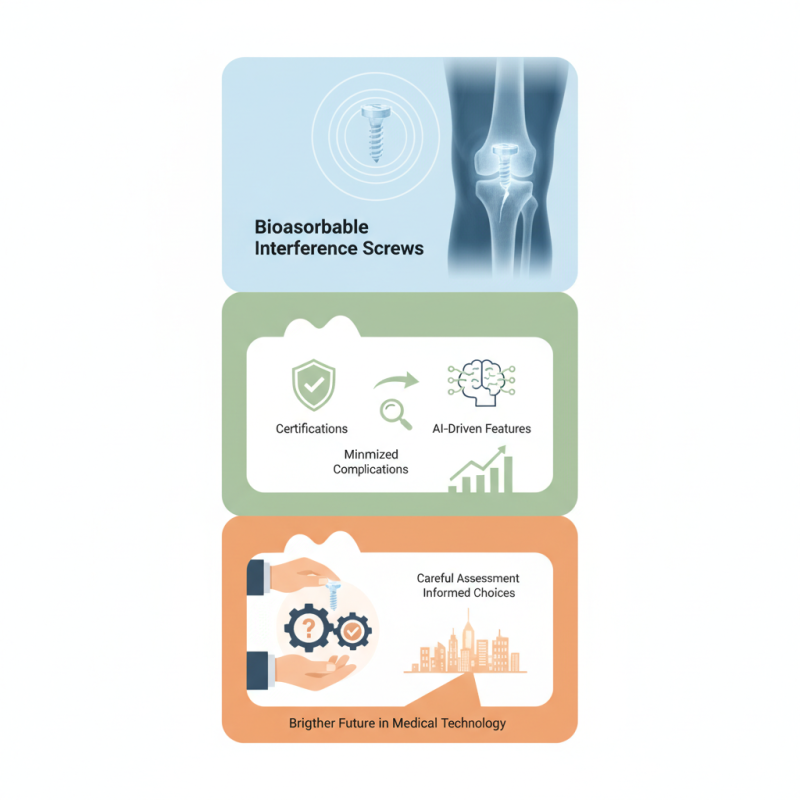
Bioabsorbable interference screws are gaining attention in orthopedics. They are often used in ligament reconstruction surgeries. These screws are designed to gradually absorb into the body. The advantage is that they support healing without leaving permanent hardware. Many surgeons find this appealing.
The materials used in these screws can vary widely. Polylactic acid is one common choice. It's known for its biocompatibility. However, issues can arise. Some surgeons report varying rates of absorption. This unpredictability can affect the healing process. Additionally, the mechanical strength may differ from traditional materials.
Surgeons must weigh these factors seriously. Choosing the right screw involves complexity. Some screws may perform well initially but fail later. This creates a need for careful consideration. Not all bioabsorbable materials are suitable for every patient. The advancement in this area still requires ongoing research and feedback. The potential benefits are clear, yet the journey is not without challenges.
Bioabsorbable interference screws have gained attention for their application in orthopedic surgeries. These screws are designed to secure soft tissues to bone and gradually dissolve over time. One key feature is their ability to promote healing without leaving permanent hardware, which can be a source of discomfort.
Another notable characteristic is the material used in these screws. Made from polylactic acid or other bioresorbable polymers, they offer strength while being safe in the body. As these materials break down, they can be absorbed by the surrounding tissue, minimizing the risk of complications associated with permanent implants. However, the quality can sometimes be inconsistent, and this raises questions about their effectiveness in diverse scenarios.
The design of bioabsorbable screws may vary. Some have unique shapes or surface textures aimed at improving fixation. While these innovations are promising, there is still some uncertainty in how they perform over time. It's important for surgeons to assess the specific needs of each patient and consider both the benefits and potential drawbacks of using these screws.
| Feature | Details |
|---|---|
| Material Composition | PLLA (Poly-L-Lactic Acid) and PGA (Polyglycolic Acid) |
| Screw Diameter | 4.5 mm, 6.5 mm |
| Screw Length | 20 mm, 25 mm, 30 mm |
| Absorption Time | 6-12 months |
| Biocompatibility | High compatibility with human tissue |
| Tensile Strength | Suitable for soft tissue fixation |
| Color Options | Transparent, Blue |
| Application Areas | Orthopedics, Sports Medicine |
The 139th Canton Fair showcases various innovative products, particularly in the medical field. Among these, bioabsorbable interference screws draw significant attention. These screws are vital for orthopedic surgeries. They provide stability while reducing the need for a second surgery to remove hardware.
A recent industry report indicates that the global bioabsorbable screw market is expected to exceed $500 million by 2026. This growth reflects rising demand for minimally invasive surgical techniques. Hospitals and clinics seek products that promote healing and reduce post-operative complications. The Canton Fair serves as a platform for top brands to present their latest technologies.
Tip: When considering bioabsorbable interference screws, evaluate material quality and absorption rate. Not all products perform equally, and some may have faster degradation than others, potentially affecting the healing process.
Several exhibitors at the Canton Fair focus on enhancing product safety and effectiveness. However, not all manufacturers prioritize these aspects. It's crucial to research and assess each brand’s clinical data. Transparency in performance metrics should guide purchasing decisions for healthcare providers.
Tip: Don't overlook user feedback and case studies. They can provide real-world insights into product performance. Always ask for samples to validate claims before making bulk purchases.
Bioabsorbable interference screws are gaining attention in orthopedic procedures. A comparative analysis reveals their advantages over traditional metal screws. Bioabsorbable screws are designed to dissolve in the body, promoting natural healing. This technology reduces the need for a second surgery for removal, which is a common requirement for metal screws.
Research shows that bioabsorbable screws can offer comparable mechanical properties to metal screws. According to a recent report, around 70% of surgeons favor bioabsorbable screws for anterior cruciate ligament (ACL) reconstruction due to their minimal irritation to surrounding tissue. However, some experts highlight concerns. The degradation rate can vary significantly, impacting the screw's strength over time. It’s essential to consider patient-specific factors when choosing the right screw.
Tips: Always evaluate the material properties of the screws. Pay attention to the degradation profile. Patient outcomes depend on effective choices. Keep abreast of clinical studies that explore the nuances in different scenarios. Not every patient will have the same success with bioabsorbable technology. Understanding these differences is critical in surgical decisions.
The market for biodegradable medical devices is evolving rapidly. In recent reports, the global bioabsorbable interference screws market is expected to reach $1.5 billion by 2027. This indicates a growth rate of around 12% annually. Key drivers include the rising demand for minimally invasive procedures and heightened awareness of environmentally friendly products.
At the 139th Canton Fair, many innovations in bioabsorbable materials were showcased. New technologies aim to enhance mechanical strength while ensuring complete bioabsorption. However, some products still struggle with early degradation. This raises concerns about their long-term effectiveness and safety in various applications.
Moreover, research highlights a challenge: some bioabsorbable materials can induce inflammatory responses in certain patients. This underscores the need for ongoing innovation and rigorous testing. Industry experts agree that more comprehensive studies could lead to better product offerings and higher patient satisfaction. Through collaboration, manufacturers can overcome these challenges in this promising field.
: They are screws used in ligament reconstruction that fully absorb into the body.
They support healing and eliminate the need for permanent hardware removal.
Polylactic acid is a common choice due to its biocompatibility.
Several factors can cause variation, affecting healing and recovery.
Not all materials suit every patient, and initial performance may not predict long-term outcome.
They promote natural healing and reduce the need for a second surgery for removal.
Not all manufacturers prioritize safety and effectiveness; transparency is vital for choice.
Real-world insights help assess product performance beyond manufacturer claims.
The degradation profile and mechanical strength over time should be carefully evaluated.
No, patient-specific factors must be considered to ensure successful outcomes.
The article titled "Best Bioabsorbable Interference Screws at the 139th Canton Fair" provides a comprehensive overview of bioabsorbable interference screws used in orthopedic procedures. It highlights the key features of these innovative devices, such as their ability to gradually dissolve within the body, eliminating the need for a second surgery to remove them.
Furthermore, the article presents a comparative analysis between bioabsorbable and traditional interference screws, emphasizing the growing trend of biodegradable medical devices in the market. As showcased at the 139th Canton Fair, various brands are leading the advancement of bioabsorbable interference screws, reflecting an important shift toward more sustainable and patient-friendly orthopedic solutions. This evolution signifies a pivotal change in the approach to surgical procedures and recovery.

Daher Orthopedic Implants